Generative
World Models.
Construct worlds. Ground them in reality. Learn through interaction.
We build controllable, reality-aligned 3D environments and evaluate how agents understand, edit, and act within them.
From evidence to environments.
Controllable generation, real-world grounding, and editable 3D assets.
From understanding to action.
Spatial reasoning, scene correction, and closed-loop refinement in 3D worlds.
UrbanWorld
UrbanWorld: An Urban World Model for 3D City Generation
Preprint 2024.07Create customizable urban environments.
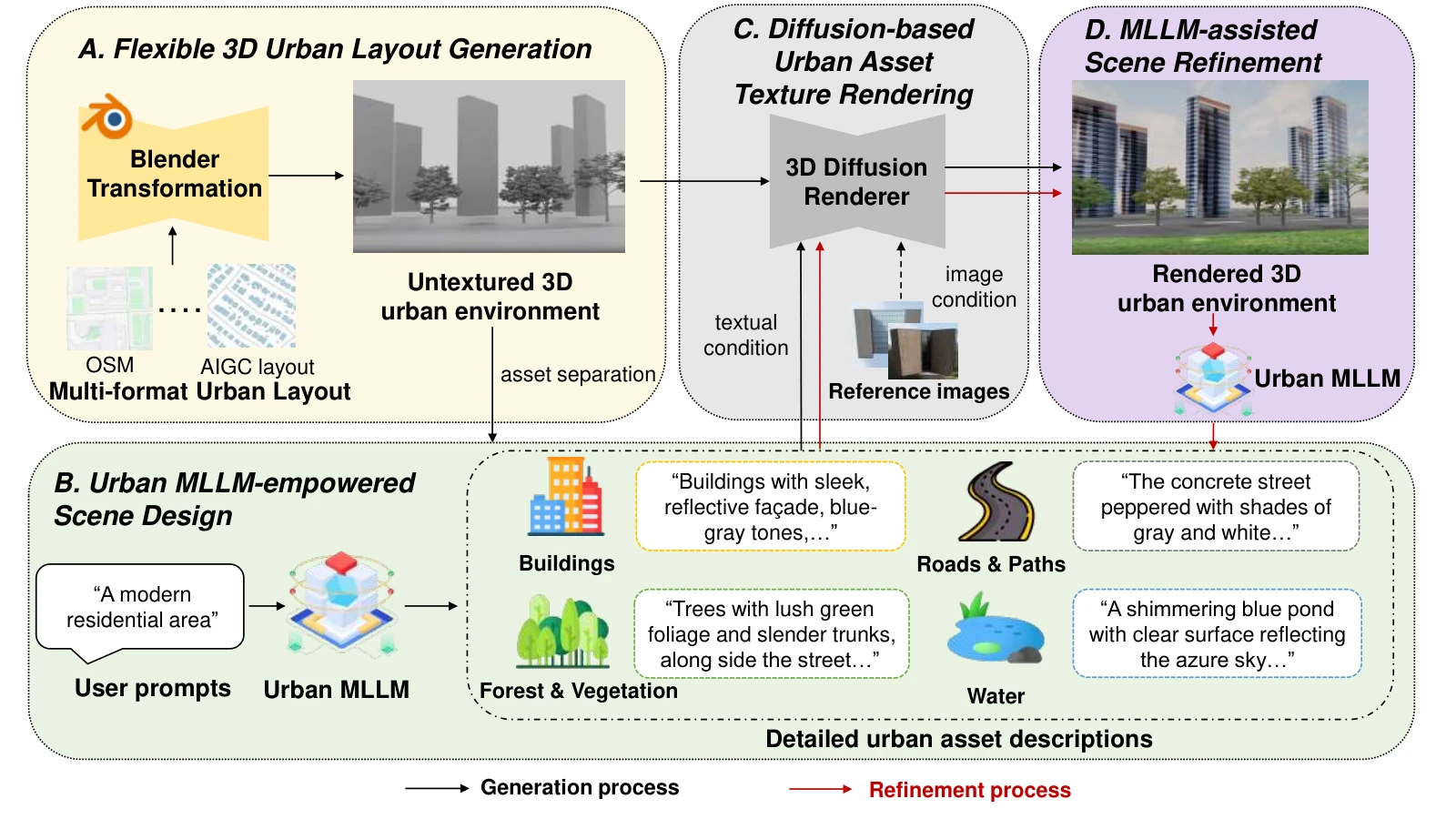
UrbanWorld combines flexible urban layouts, multimodal scene design, texture generation, and iterative refinement to create customizable 3D cities from text and image prompts.
Controllable environments provide a setting for agent perception, navigation, and simulation.
UrbanWorld2.0
UrbanWorld2.0: A Multimodal Agentic Framework for Reality-Aligned 3D World Generation at City-Scale
ACM MM 2026Ground generated worlds in real places.
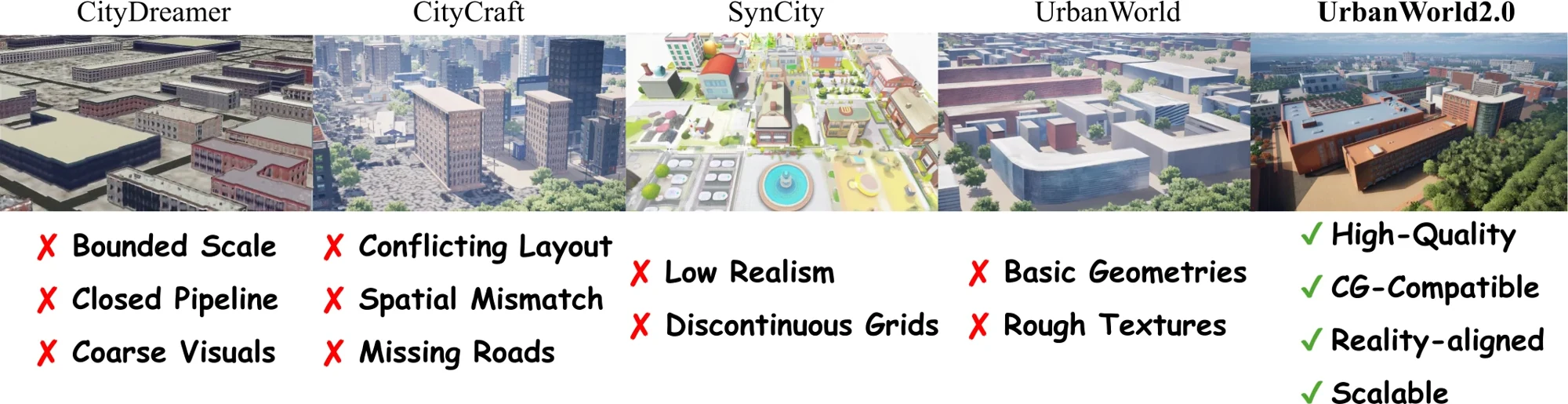
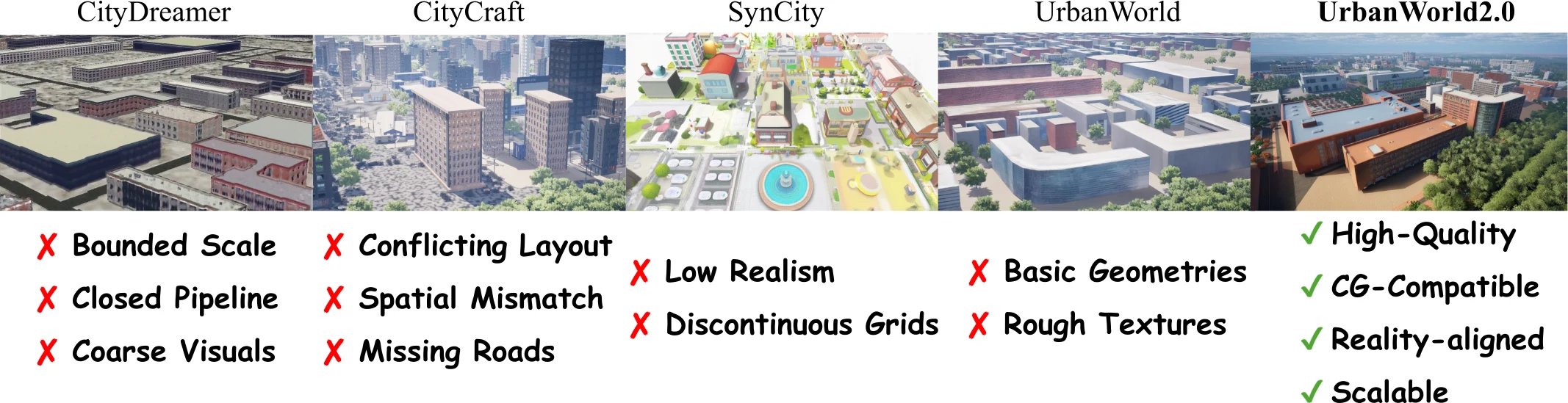
UrbanWorld2.0 uses a multimodal agent to coordinate planning, perception, generation, and refinement, grounding city-scale 3D worlds in real geospatial and visual evidence.
This connects real-world observations with editable 3D environments, bringing visual, geometric, and semantic structure together.
CityLift
CityLift: Compositional 3D Urban Generation from a Single Image
Preprint 2026.10Turn an urban image into editable 3D assets.
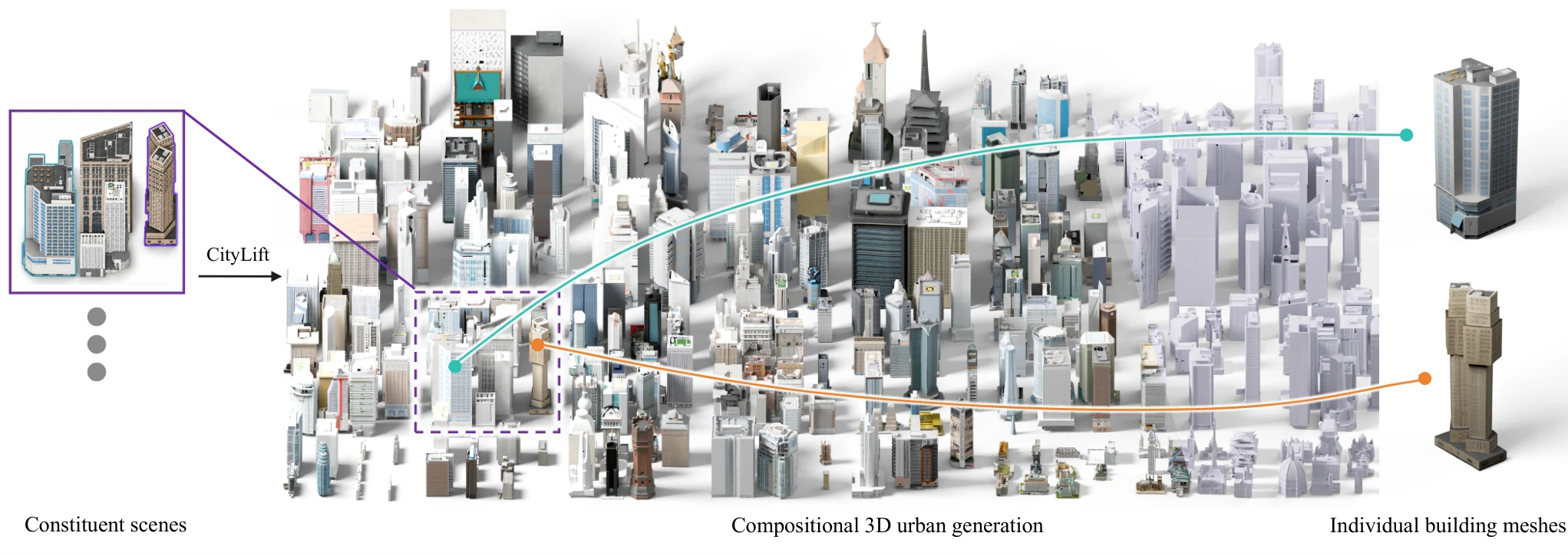
CityLift turns a single urban image into a coherent scene of individually editable building meshes, combining scene-level spatial structure with detailed building generation.
The compositional representation preserves building placement while allowing individual assets to be edited and recombined.
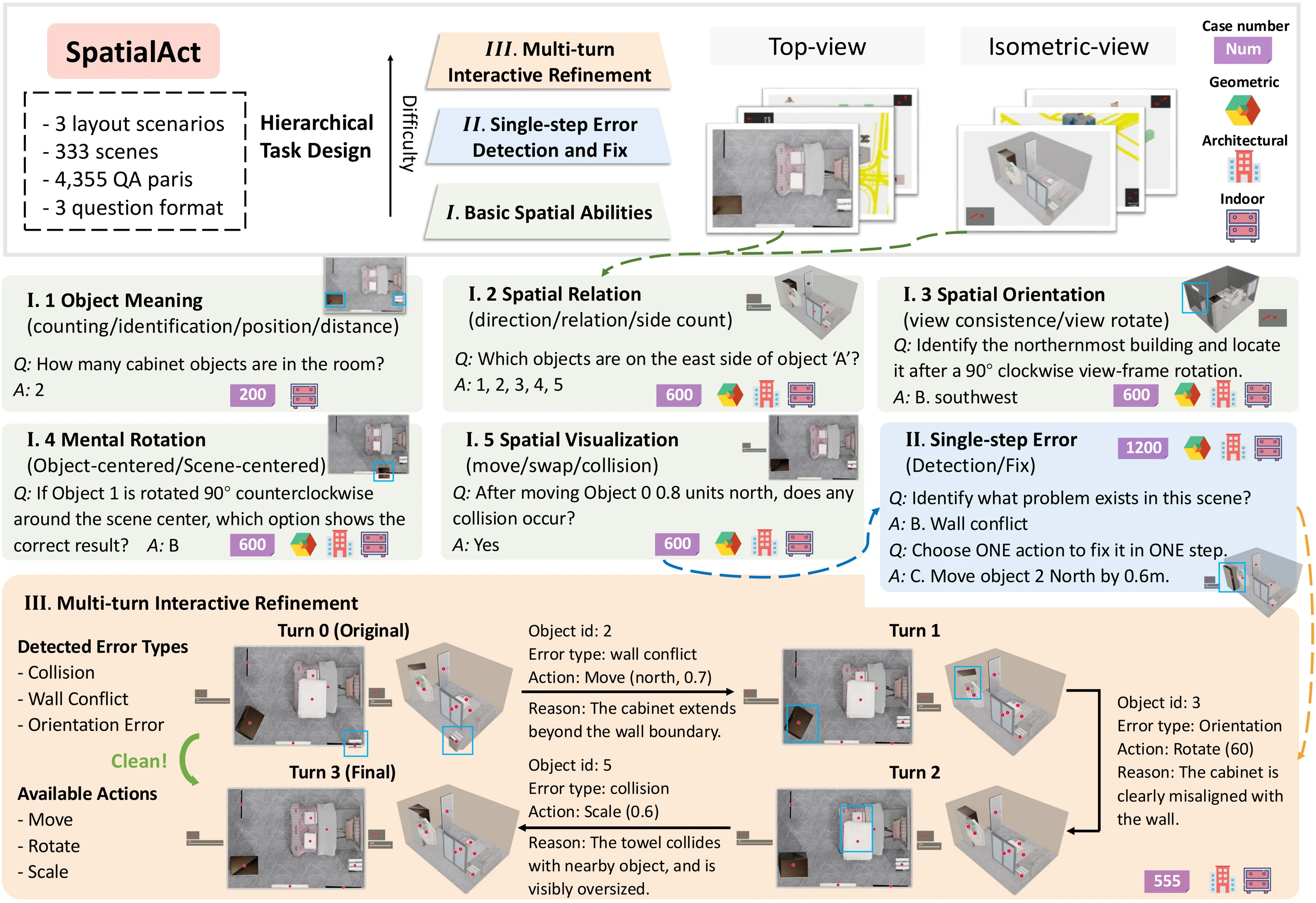
SpatialAct
SpatialAct: Probing Spatial Reasoning-to-Action Capabilities of VLM Agents in 3D Scenes
Preprint 2026.05Test how spatial understanding becomes action.
SpatialAct evaluates whether vision-language model agents can turn spatial understanding into reliable actions in 3D scenes, from basic reasoning to error correction and multi-turn refinement.
Interactive evaluation closes the loop between world construction, agent understanding, and scene refinement.
Questions we are exploring next.
How can generated worlds preserve real-world structure while remaining editable, interactive, and useful for evaluating agent behavior? We connect environment quality with spatial reasoning and action through feedback.
Back to the research program